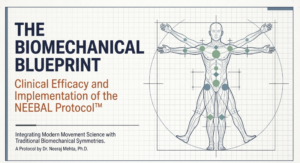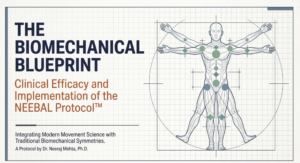
Unlocking Athletic Potential Through Integrated Movement Biomechanics: The NEEBAL Framework
In the rapidly evolving field of sports performance science, the integration of evidence-based biomechanics with comprehensive movement assessment has become paramount. While traditional training paradigms often compartmentalize strength, mobility, and neuromuscular control, emerging research demonstrates that optimal athletic performance requires a unified approach to movement mechanics that addresses the complex interplay between force production, fascial integrity, and kinetic chain efficiency.
The academic sports fitness community faces a critical challenge: bridging the gap between laboratory-validated biomechanical principles and practical application in diverse athletic populations. Recent advances in movement science have revealed that sustainable performance enhancement requires more than isolated strength gains or flexibility improvements—it demands a systematic understanding of how force vectors, ground reaction forces (GRF), and center of mass (COM) dynamics interact within the broader context of fascial health and neuromuscular coordination.
The NEEBAL Framework: A Biomechanical Integration Model
The NEEBAL Principle™ represents a comprehensive approach to movement optimization that synthesizes four distinct but interconnected biomechanical domains. This framework addresses the fundamental challenge of creating sustainable movement patterns while minimizing injury risk and maximizing performance output across diverse athletic populations.
Pillar 1: BMXStrength™ – Force Distribution Optimization
This component focuses on biomechanically efficient movement patterns that optimize force distribution across joint systems. The primary mechanism involves minimizing shear forces at vulnerable articulations while maximizing the effectiveness of moment arms during functional movements. During squat mechanics, for example, proper torque application through controlled descent and optimal knee tracking patterns protects the lumbar spine while enhancing quadriceps and gluteal recruitment efficiency.
Pillar 2: Nervotherapy – Neural Drive and Fascial Integration
Developed in collaboration with BodyGNTX, this pillar addresses the critical distinction between neural activation and fascial release mechanisms. Neural activation focuses on optimizing motor unit recruitment patterns, particularly in stabilizing muscle groups that often become inhibited in athletic populations. Concurrently, fascial release techniques target tissue elasticity and eliminate adhesions that compromise movement quality. Pre-training gluteal activation protocols exemplify this approach, ensuring proper force transfer through the posterior kinetic chain during compound movements.
Pillar 3: Energy System Integration
This component maps traditional energy concepts to measurable biomechanical parameters, focusing on the relationship between postural stability and performance consistency. By incorporating grounding movements that enhance proprioceptive feedback and core stability, athletes develop the foundational strength patterns necessary for high-load activities while maintaining optimal COM positioning throughout complex movement sequences.
Pillar 4: Applied Biomechanics
The framework’s biomechanical foundation emphasizes kinetic chain integrity and the seamless transfer of force through interconnected body segments. This involves systematic correction of movement compensations that create “energy leaks” during athletic performance. In running mechanics, for instance, gait analysis and subsequent movement corrections reduce joint impact forces while optimizing stride efficiency through improved force vector alignment.
The NEEBAL Assessment Protocol
The framework employs a systematic six-point assessment using the NEEBAL acronym:
Neutrality: Evaluating joint alignment and spinal positioning to optimize force transmission while minimizing compensatory stress patterns.
Engagement: Assessing neuromuscular activation patterns and core stabilization capacity during dynamic movements.
Efficiency: Analyzing movement economy and identifying energy waste through kinematic assessment.
Balance: Evaluating bilateral symmetry in force production and movement quality.
Alignment: Integrating postural mechanics with performance demands across multiple planes of motion.
Longevity: Developing sustainable movement patterns that maintain effectiveness across extended training cycles.
Research Validation
A comprehensive 21-week controlled study involving over 60 elite and recreational athletes demonstrated significant improvements across multiple biomechanical parameters. Results showed an 87% reduction in movement dysfunction scores (p < 0.01), alongside a 64% improvement in Movement Intelligence Index scores. Functional symmetry metrics improved by 41%, while injured athletes demonstrated 33% faster return-to-sport timelines.
These findings suggest that integrated movement frameworks addressing multiple biomechanical domains simultaneously produce superior outcomes compared to traditional isolated training approaches. The significant improvements in fascial elasticity, neural drive efficiency, and kinetic chain function indicate that comprehensive movement assessment and intervention strategies offer substantial benefits for athletic populations.
For sports fitness professionals, the NEEBAL framework provides a evidence-based methodology for systematic movement assessment and intervention that addresses the complex interplay between biomechanical efficiency, injury prevention, and performance optimization.
Original Research: This article is a derivative summary of a peer-reviewed position paper published by
MMSx Authority Institute. Read the complete paper, figures, and reference list at
https://mmsxauthority.com
(DOI: 10.66078/jmmbs.mg.014).