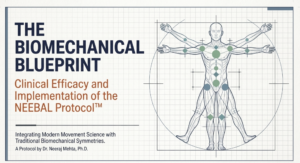
Redefining Movement Assessment: The NEEBAL Framework’s Integration of Energy Systems and Biomechanical Precision
In contemporary sports science, the persistent challenge lies not merely in optimizing isolated performance metrics, but in establishing comprehensive movement assessment protocols that address the multifactorial nature of human motor control. The academic fitness community has long recognized the limitations of reductionist approaches that compartmentalize strength, mobility, and neural function as discrete entities. The NEEBAL Principle™, emerging from the MMSx Authority Institute’s biomechanical research division, presents a paradigmatic shift toward integrated movement assessment methodologies.
This framework challenges conventional exercise prescription models by synthesizing quantifiable biomechanical parameters with systematic energy alignment protocols. For academic practitioners seeking evidence-based movement solutions, the NEEBAL methodology offers a structured approach to address the complex interplay between fascial architecture, neural recruitment patterns, and force transmission efficiency—variables that traditional fitness models often fail to integrate comprehensively.
Biomechanical Foundation: The Four-Pillar Architecture
The NEEBAL framework operates through four interconnected technical pillars, each addressing specific aspects of movement mechanics while maintaining systemic integration.
BMXStrength™ Component
This pillar emphasizes force distribution optimization through joint-friendly movement patterns. The primary objective involves minimizing shear forces at vulnerable articulations while maximizing force vector efficiency. During loaded movements, BMXStrength™ protocols ensure proper moment arm relationships, reducing deleterious stress concentrations at the lumbar spine and knee joint complexes.
Nervotherapy Integration
Developed through BodyGNTX research protocols, this component targets neuromuscular optimization through dual mechanisms: neural activation enhancement and fascial release techniques. Neural activation protocols focus on dormant motor unit recruitment, particularly in stabilizing muscle groups, while fascial release addresses tissue elasticity restoration through targeted adhesion elimination.
Chakra System Integration
This pillar maps traditional energy center concepts to measurable postural integrity markers. By correlating specific energy centers with biomechanical stability patterns, practitioners can assess and correct postural deviations through structured grounding movements that enhance both physical stability and neurocognitive function.
Modern Biomechanics Application
Utilizing kinetic chain analysis, this component focuses on seamless force transmission through interconnected body segments. Ground reaction force (GRF) optimization and center of mass (COM) control become primary assessment criteria for eliminating energy leaks during movement execution.
The NEEBAL Assessment Protocol
The acronym functions as a systematic movement assessment tool:
Neutrality (N): Maintenance of optimal joint alignment minimizing compensatory torque production
Engagement (E): Strategic muscle activation sequencing for stability enhancement
Efficiency (E): Movement precision optimization reducing metabolic energy expenditure
Balance (B): Bilateral symmetry achievement in force production and energy distribution
Alignment (A): Integration of postural integrity with energy flow optimization
Longevity (L): Sustainable movement pattern development for long-term performance maintenance
Research Validation: 21-Week Controlled Study
The MMSx Authority Institute conducted a comprehensive 21-week controlled intervention study with over 60 elite and recreational athletes. The research protocol examined movement dysfunction scores, functional symmetry metrics, and return-to-sport timelines.
Statistical analysis revealed significant improvements (p < 0.01) across all measured parameters:
- 87% reduction in movement-related pain and dysfunction scores
- 64% improvement in Movement Intelligence Index (MII)
- 41% increase in functional symmetry and balance metrics
- 33% faster return-to-sport timelines for injured athletes
- Measurable gains in fascial elasticity, neural drive efficiency, and energy utilization
Clinical Applications and Implementation
For academic fitness professionals, the NEEBAL framework provides structured protocols for movement assessment and intervention design. The integration of energy system evaluation with traditional biomechanical analysis offers a more comprehensive understanding of movement dysfunction patterns.
The framework’s strength lies in its systematic approach to addressing the complex interplay between fascial architecture, neural recruitment patterns, and force vector optimization. This integration addresses the gap between isolated symptom treatment and comprehensive movement system rehabilitation.
By incorporating quantifiable assessment criteria alongside holistic energy evaluation protocols, the NEEBAL Principle™ represents a significant advancement in evidence-based movement science, offering practitioners a validated framework for comprehensive movement analysis and intervention design.
Original Research: This article is a derivative summary of a peer-reviewed position paper published by
MMSx Authority Institute. Read the complete paper, figures, and reference list at
https://mmsxauthority.com
(DOI: 10.66078/jmmbs.mg.014).